
Case Study
Twelve Gates
Twelve Gates Arts, established in 2009, is a non-profit organization based in Philadelphia, PA, and a leading platform for South Asian diasporic contemporary art.
Twelve Gates
Context
Since 2009, Twelve Gates Arts (12G) has shared contemporary art from the South Asian diaspora with the Philadelphia area. Uniquely focusing on artists and art focusing on the South Asian region, 12Gates brings to light voices, stories, and histories typically left out of mainstream art. The gallery space supports artists, curators, and the Philadelphia public.
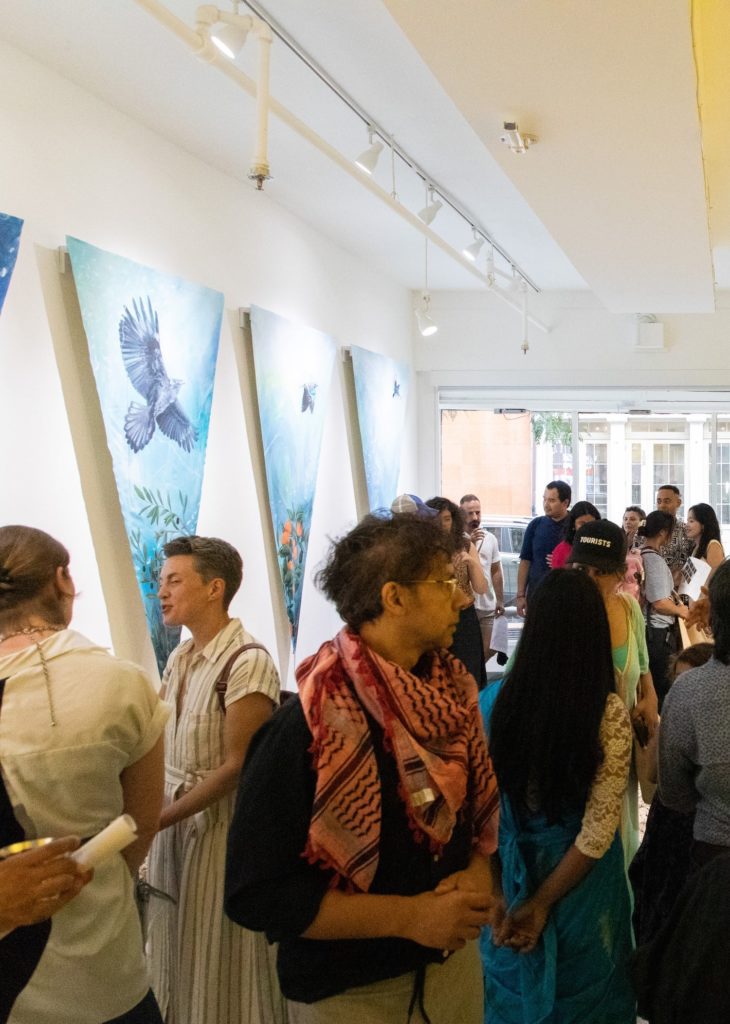
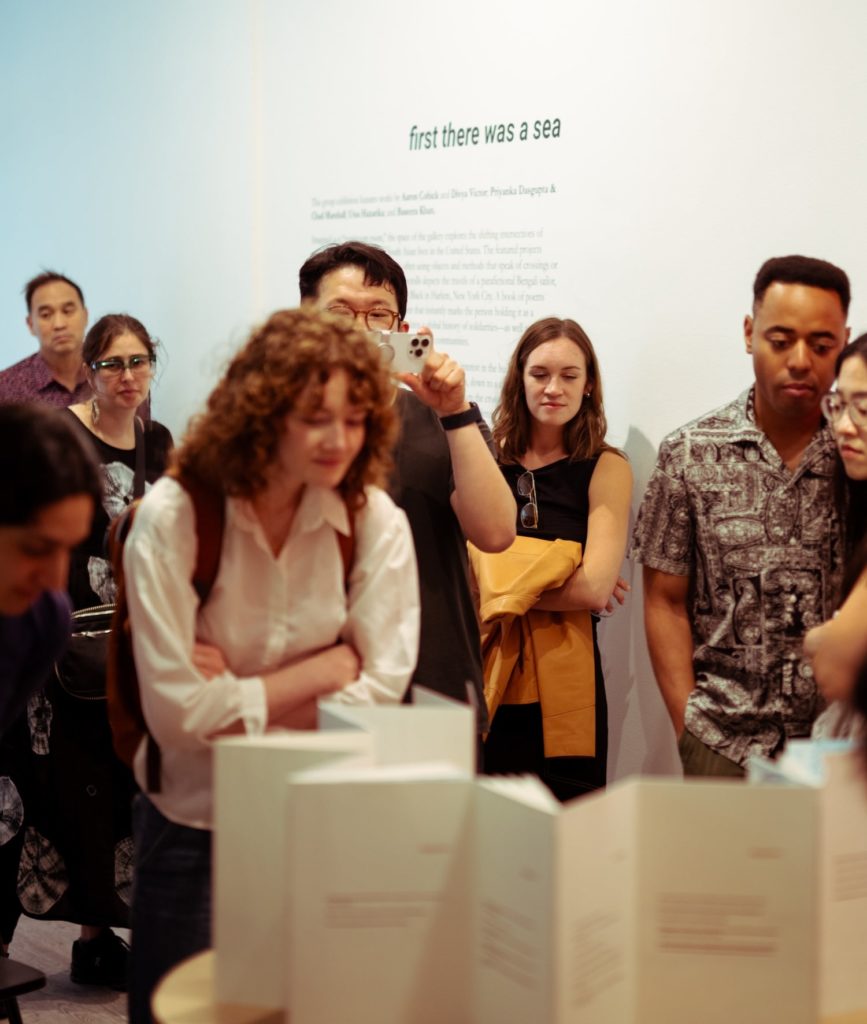
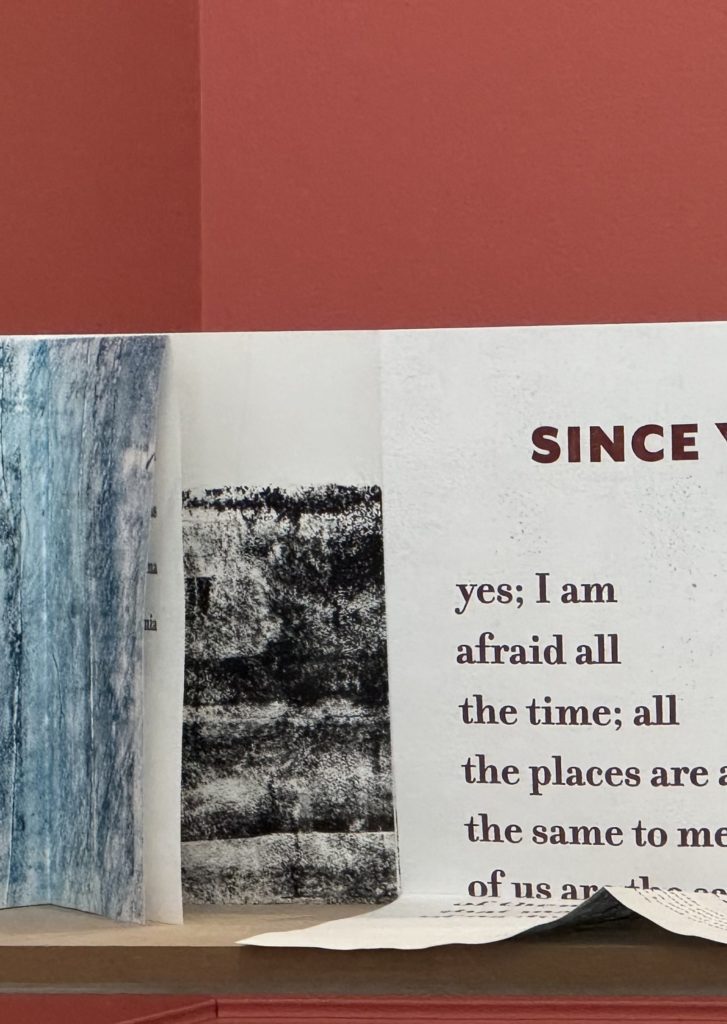
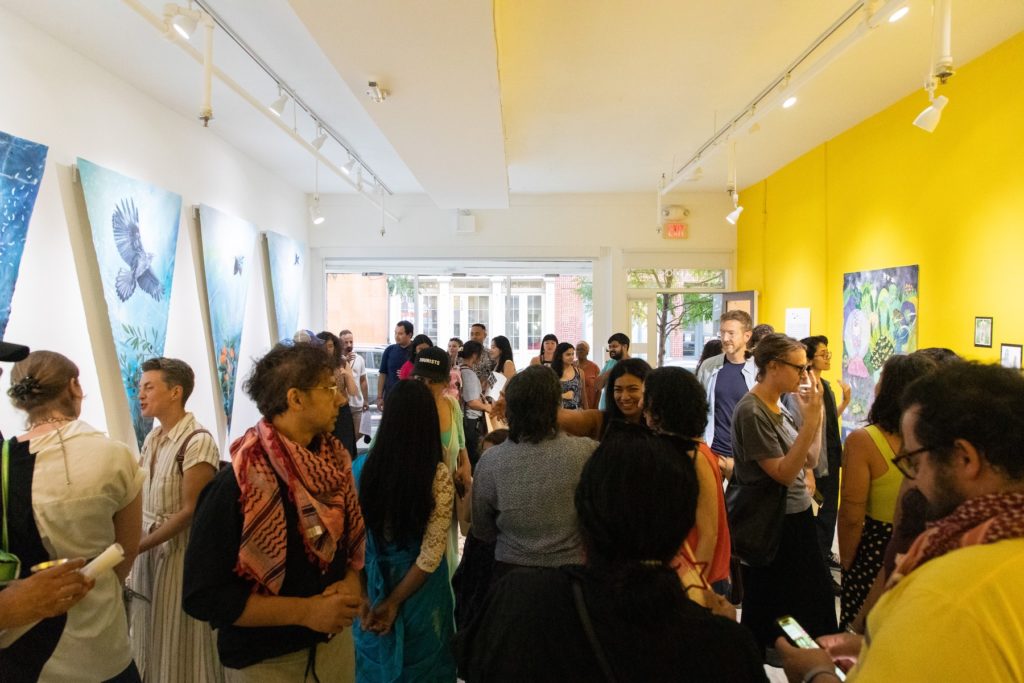
Over the course of the grant cycle, 12Gates created two exhibitions, Secrets of the Sun, and first there was a sea. These two exhibitions supported the work of ten visual artists and two curators. Over 800 attendees were introduced to one of the exhibits through opening events, accessible tours and workshops, book launches, poet’s workshops, and readings.
Twelve Gates
Problem
One of the goals of 12Gates is to question the dominant voices of the art world and the separation between artist and viewer. Some tensions and questions that emerge from their work include:
Twelve Gates
Vision of the project
From the start, Twelve Gates Arts planned “two group exhibitions that explore diverse religious and spiritual identity formations in South Asian Americans, particularly within the religious minority communities”
Experience of the Project
Twelve Gates Arts put on “two group exhibitions that explore diverse religious and spiritual identity formations in South Asian Americans, particularly within the religious minority communities.”
A few experiences stand out:
01
Allow space for visions to change and develop
Through the work of the grant, 12Gates found the original concepts of the exhibits shifting to meet the present moment
The first exhibit, Secrets of the Sun, shifted to “deepen its engagement with ecological intimacy and spiritual self-determination alongside queer mythologies.”
The second exhibit, first there was a sea, “expanding from Pakistani Christian focus to explore multiple timelines of South Asian American religious and racial experience.”
02
Being open to new types of coalition building
“The first there was a sea conference brought together the AARC cohort in Philadelphia, creating meaningful connections across organizations. As one participant reflected, gathering under one roof allowed the cohort to build genuine friendships beyond formal meetings—coalition building through shared experience of art and dialogue.
03
Responding to current tensions
Palestinian art work
Lessons Learned
Being intentional with categories
“For 12G, we’ve always centered “South Asian” and “SWANA” (Southwest Asian, North African) identities alongside broader diasporic frameworks. Yet we observed how these regional and ethnic specificities often get collapsed under “Asian American” in ways that can both enable coalition and obscure difference.
The current political moment has made this even more complex. As DEI initiatives face backlash and funding landscapes shift, we’ve found ourselves needing to be more intentional about self-determination in naming. We need to emphasize that these are identity categories claimed by communities themselves, not imposed from outside, and we need to challenging monolithic narratives by actively resisting the “model minority” myth and other reductive framings that erase the tremendous diversity within Asian and Asian American communities. And lastly foregrounding how race, caste, religion, immigration status, LGBTQ+ identity, and disability intersect within Asian American experiences.
In grant applications, we often need to use “Asian American” as a legible category while also explaining our specific focus on South Asian and SWANA communities. In our programming and community spaces, we prioritize the more specific regional, ethnic, and religious identities that our artists and audiences claim for themselves.
Emergent Questions
How do you find the “right” project?
As I mentioned above, 12G is fortunate to have an advisory board, a curatorial team, and staff who all participate in determining whether a project is the right fit. When an opportunity arises, we never decide in isolation – we call a quick launch meeting to discuss why the project excites us, what it asks of us, and what potential challenges we need to anticipate. For us, “the right project” is always about alignment with our mission, timing, and community impact.
When we talk about something being “worth it,” it’s never measured in dollars. It’s about the strength of the idea, who it will impact, and why it’s important at this moment. Once we weigh those factors, we move forward with implementation. As a mid-size organization, budget can be a real hurdle, but opportunities like AARC allow us to fully lean into our curatorial vision and do the work we believe in.
How to build a team and board?
Building a team is one of the most essential parts of running an organization – whether that means staff, an executive board, an advisory board, or trusted community members who inform our work. At 12G, we’ve been fortunate, but that comes from moving carefully and intentionally. Any time I’ve rushed a recruitment decision, it hasn’t served us well.
For board members, it’s important to recruit people who genuinely understand and align with your values, not people looking to impose their own vision. One useful tool is partnering with local organizations that run board-matching programs, which can help you find individuals whose interests and commitments fit your mission. For advisory board members, we’ve found the most effective approach is inviting people we’ve worked with before – people who already know our practice, care about the communities we serve, and see the relationship as mutually beneficial.
Over 16 years, we’ve made a few missteps despite careful processes, and that’s inevitable. The key is to stay focused on your mission, learn from those moments, and not let them shake your commitment to the communities you work with.